Blu Tack and Belonging: A Year Spent Reading Other People's Small Ads
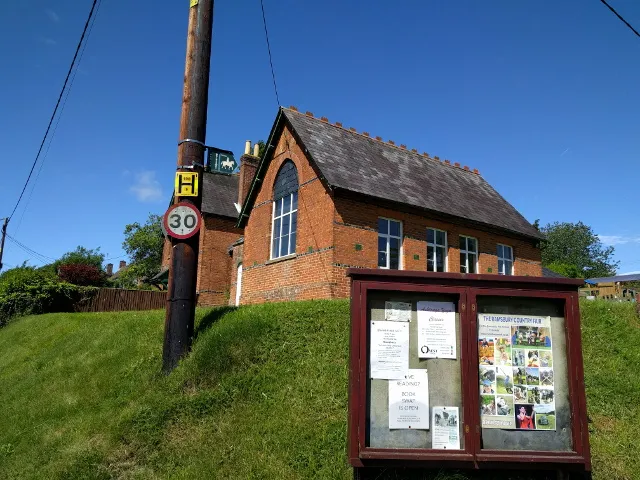
Photo: Rob Purvis , CC BY-SA 2.0, via Wikimedia Commons
I did not plan to spend a year of my life reading other people's small ads. It started on a wet Saturday in January, in a village hall in Threxton, where I had gone for a jumble sale that turned out to be the following week. With forty minutes to kill and a mug of tea from an urn that had clearly done service in the Falklands, I ended up in front of the noticeboard by the door. I stayed there for twenty-five minutes. That board was more interesting than most of the internet.
By the end of December I had photographed 214 noticeboards across three towns — Threxton, Woburn Sands, and a coastal place I will call Fenwick because the residents would rather I did not — and filled two notebooks with what I can only describe as micro-local news.
The Anatomy of a Pinboard
A good noticeboard is layered like archaeology. At the back, the ghosts: pale rectangles where posters used to hang, sun-bleached to a shade of yellow that paint manufacturers should look into. Then the long-runners: a laminated warning about dog fouling, a card for a piano tuner who has clearly been dead for years and whose number nobody has the heart to remove. Then the fresh layer: yoga, a quiz night, a shed for sale.
The shed sale deserves its own paragraph. Shed, six by four, good condition, some damp, buyer collects, no time wasters. There is always a shed for sale. Always six by four. Always some damp. Always no time wasters, which I take to mean the seller has been messed about before and now carries that scar in public.
The Tear-Off Tab Economy
A word on tabs. The little fringed strip of phone numbers along the bottom of a poster is one of the last surviving forms of advertising that respects you. You take a tab only if you genuinely intend to ring. There is a whole etiquette to it: never take the last tab, because doing so strands the next reader; if you take two, you had better have a reason. I once found a poster with every tab gone except one, and I have thought about that single remaining tab more than I have thought about most news stories this year.
What a Pinboard Knows That a Feed Does Not
Nothing on a noticeboard is trying to sell me something I did not ask for. There is no algorithm deciding that because I once looked at a hedge trimmer I might enjoy forty more hedge trimmers. A board is chronological, finite and complete. When you reach the bottom, you have seen everything. In 2026 that is a profoundly relaxing experience.
The other thing is accountability. If your shed is not, in fact, in good condition, you will see the buyer at the Co-op on Tuesday. There is no comment section, no anonymous handle, no moderation queue. The moderation is the vicar taking down something he considers a bit much. The editing is a biro.
Lost Cats and Other Breaking News
The cats. Mabel, grey, slightly rude, last seen near the recreation ground. A tortoise called Brian, typed notice, no photograph, which suggests either enormous confidence or an ongoing situation. A parrot, listed as possibly still in the area, which is the most honest sentence I have ever read on a laminated card.
Alongside the cats, though, is the genuine infrastructure of a place. A liftshare to the hospital on Thursdays. A note about where the defibrillator lives. A plea from an elderly resident for help with a hedge, written on the back of a birthday card and helpfully annotated by someone else with a phone number and the words he is lovely, do ring.
The Honest Newspaper Argument
Here is the serious bit, and I will keep it short because we are all tired. Local newspapers have been closing for two decades and 2026 is not the year they bounced back. Council offices have moved online. Parish newsletters are PDFs nobody opens. Into that gap has stepped — not glamorously, not with funding, but persistently — the pinboard. In several towns I visited it is the last place where information about the actual physical neighbourhood is posted where people will actually see it.
It is not a newspaper in the professional sense. Nobody fact-checks it. But it is honest in a way a sponsored post is not, because it is made by people who have to live with the consequences. A noticeboard is a newspaper edited by its own readers, and its circulation figures are simply whether people stop to read it.
The One That Stayed With Me
In Fenwick, in the porch of a church, there was a card that said: reliable plumber wanted. Not urgent. Just nice to know one exists. Underneath, in different handwriting: ask for Dave, he is good, he will come.
That is local news in two sentences. Need, and a neighbour who knows a person.
There are worse things to do with a year than read them. I have got a flask and a decent pair of boots. If you see a man standing too long in front of a noticeboard in your town, looking pleased with himself, do say hello. He is harmless.