The Wonky Label Principle: In Praise of the Museum With the Shivering Radiator

Photo: small volunteer run local museum glass display case dusty exhibits, via pawtangle.com
There are two kinds of museum in this country, and only one of them lends you a pencil.
The first kind has a booking system, a sponsor above the door and a security guard who says the word gallery the way a dentist says open wide. It is excellent. You should go.
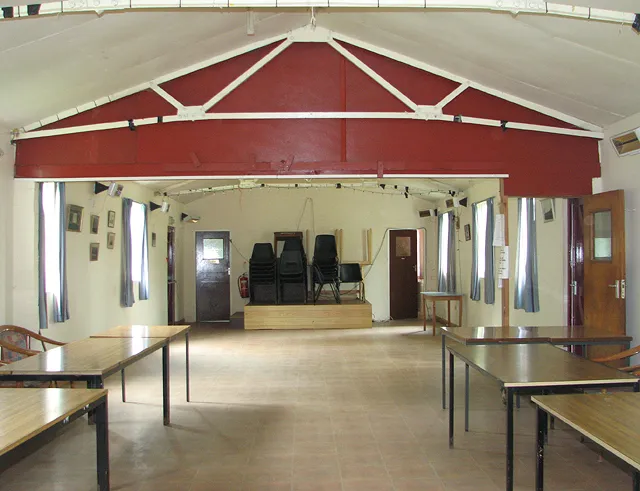
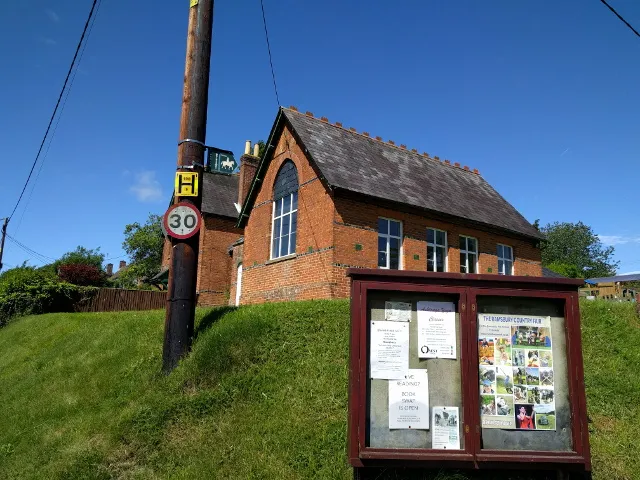
The second kind is in a converted chapel in a market town, charges two pounds, and is staffed by a man in a fleece called Derek who is genuinely delighted to see you and slightly surprised. The radiator clanks. One label is in Comic Sans. The gift shop is a card table with postcards from roughly 1987 on it.
I love the second kind, and I want to make the case for it while it is still here.
The Radiator Is Part of the Exhibit
Nobody has ever described a shivering radiator as interpretation, but it is. It tells you the building is cold, the heating is expensive, and the volunteers have decided the heating matters less than the roof. That is real information about a real place. In the big museum the temperature is set to a standard that protects the objects and tells you nothing except that the objects matter more than you do.
The local museum smells of beeswax and damp and, faintly, of tea. It has a bench. It has a visitors' book going back to 1993, with entries from people who came on a coach trip and wrote lovely, worth a visit, and people who came in 2019 and wrote much the same thing. Continuity is a form of comfort.
What a Wonky Label Gets Right
A label typed by a volunteer, printed, trimmed by hand and stuck to a card with tape that has yellowed is not a failure of professionalism. It is a confession. It says: a person made this, in a hurry, for you, for nothing.
The best ones contain uncertainty. Probably a cat. Believed to date from the 1890s. Found in the vestry wall. The big museums have resolved all of that into certainty, because certainty is what funders like. The local case still says probably, and probably is more honest about how most history actually reaches us: as a guess with a story attached.
The Drawer Marked Miscellaneous
There is always a drawer marked miscellaneous, or a case called Local Objects, or a shelf labelled simply Bits. It contains a spectacles case, three buttons, a badge from a bowling club, an unlabelled key. No curator in the world would build an exhibition out of this. And yet it is the truest thing in the building, because it is what a community actually kept.
Shelf space is the only editor. When you can only display what fits in a donated cabinet, every object in it was chosen by somebody who cared enough to give it away. That is a different selection principle from a national collection, and I would argue it is just as interesting.
The One That Made Me Stop
In the case by the window, next to the medals and the bit of the old post office sign, there is a mummified cat.
It was found in the wall of the vestry in 1974, during some building work, and put in a glass case, as one does. The label says: Probably a cat. Found in the vestry wall, 1974. And then, in a different, later font taped underneath: Possibly older than the building.
I stood there for a long time. Not because it is a great treasure, but because two generations of volunteers had looked at this strange object and added the most careful, modest thing they could think of. Nobody had been sent round from a national body to smooth it out. It was just the best they could do, and the best they could do was honest, funny and oddly moving.
Seven Rules for Visiting Properly
- Bring cash. The card machine is a hope, not a plan.
- Read every label, including the apologetic ones. They are the best writing in the building.
- Ask the volunteer a question. Not a hard one. Where did that come from will do. You may get twenty minutes and the whole history.
- Sit on the bench for at least two minutes. It is there for a reason.
- Buy something from the gift shop, even a postcard. Two pounds from you is a light bulb, or a new wedge of Blu Tack.
- Sign the visitors' book, and write something true. Not amazing, just true.
- Leave one thing unseen. A reason to come back is worth more than a complete visit.
The Grand Places Cannot Do This
I am not against the big museums. The ones in London are free, extraordinary and a genuine civic gift. But they are edited for coherence, and coherence has a cost. They tell you a story with a beginning and an end, and you leave satisfied and slightly full, like after a nice lunch.
The local museum does not do coherence. It does accumulation. It says: here is what we have, here is what we know, here is what we think. It leaves a gap where you can put yourself. That gap is not a flaw. It is the whole point.
So: go to the big one. Then go and find the little one with the clanking radiator and the card table, and put two pounds in the honesty box. Derek will be pleased to see you, and the cat will still probably be a cat.