Fifty Pence on the Shelf: Confessions of a Charity Shop Book Gambler
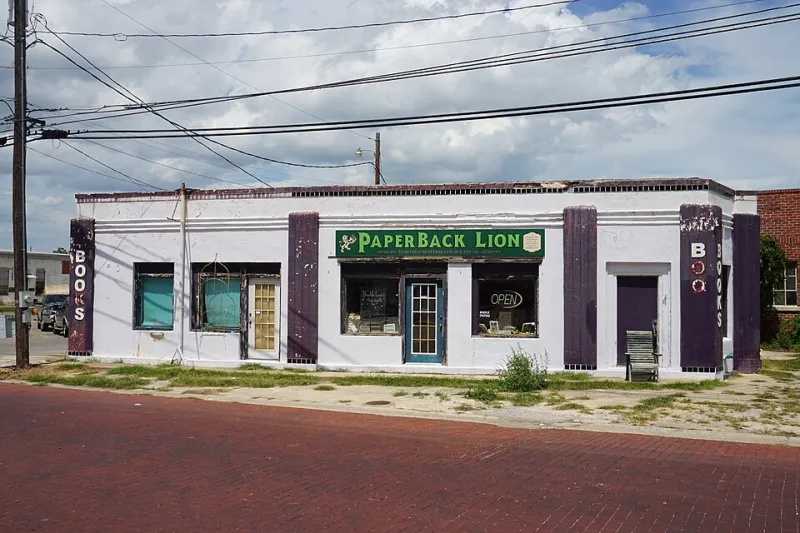
Photo: Michael Barera, CC BY-SA 4.0, via Wikimedia Commons
There is a particular shelf in my local British Heart Foundation shop that I have come to regard as a kind of national institution. It is laminated pine, slightly bowed in the middle, and it holds around forty paperbacks at any one time. Everything on it costs either £1, £1.50 or, if the volunteer with the pricing gun has had a generous morning, 50p. I have never once walked past it without stopping. I am not proud of this. I am, however, consistent.
The thing about the charity shop book shelf is that it is not curated. It is not chosen, reviewed, or recommended by anybody. It is simply the residue of a thousand house clearances, and that is exactly why it is the most honest literary survey in Britain.
The Seven Archetypes of the Shelf
Spend twenty minutes in front of one of these shelves and patterns start to emerge. I have catalogued them, because I have that sort of time.
The Optimist's Self-Help Section. Always three or four of them, always with titles that sound like they were written by a man shouting encouragement through a letterbox. Who Moved My Cheese? is a permanent resident. The Secret turns up with the smugness of a book that knows it is going straight to the charity shop again.
The 1970s Cookbook. Prawn cocktail on the cover, aspic somewhere in chapter six, and a photograph of a woman in a headscarf looking sternly at a casserole. I own four. I have cooked from none. I will buy a fifth.
The Airport Thriller Wall. Wilbur Smith, Lee Child, Dan Brown, and a copy of The Da Vinci Code so well-thumbed it has started to come apart at the spine. Somebody loved that book on a beach in 2006 and has been trying to get rid of it ever since.
The Well-Meaning Relative Book. A misery memoir with a cover of a child's shoes, inscribed in biro: For Colin, Happy Christmas, from Auntie Joan. Colin did not read it. Colin has made his position clear.
The Former Textbook. Economics for A-Level (1987 edition), a Haynes manual for a car that has not been on the road since the Blair government, and a dictionary with a broken spine held together with packing tape.
The Order of Service. Technically not a book, always on the shelf, always 50p, always a bit much for a Tuesday morning.
The One Good Book. It is there. It is always there. It is not the one you came in for, it is the one you did not know you needed, and it will be gone by Thursday.
A Tuesday Morning Confession
I found my best one in the shop by the bus stop. It was a 1968 Ordnance Survey map of the county, folded into a limp orange cover, priced at £1.50 and annotated in pencil by somebody who clearly walked the whole thing. Little ticks along footpaths. A circle around a pub near the river with the word good underneath. I have never used it for walking. I have used it to feel connected to a stranger who liked a pub in 1974, which is, if you think about it, a fairly reasonable use of £1.50.
The same trip produced The Secret (donation, not purchase) and a slim hardback of essays by a writer nobody remembers, which I read in two evenings and have recommended to three people since. That is the lottery. You buy four books because they cost the price of a decent sandwich between them, you get one that changes your year, and you put the rest back in a different charity shop three streets away so the cycle can continue. This is not hoarding. This is a redistribution service.
Why Randomness Beats Recommendation
We are forever being told what to read. Algorithms, bestseller lists, the bloke at the counter with strong opinions about literary fiction and a cardigan. There is nothing wrong with any of that, but there is something quietly joyful about a shelf with no agenda. Nobody is trying to sell you a lifestyle. Nobody has been paid to put The Da Vinci Code at eye level. It is there because a woman in her sixties had a clear-out and the shop has limited space and the volunteer did her best.
That randomness tells you more about your town than any survey could. The self-help shelf tells you people are trying. The cookbooks tell you what we used to feed each other. The sheer quantity of second-hand thrillers tells you that Britain reads for comfort on trains and has done for decades. Local identity lives in these shelves, and it costs about the same as a bag of crisps to access.
A Short Etiquette for the Shelf
- Do not stand in front of it for forty minutes. Fifteen is fine. Twenty if it is raining.
- Re-shelve it yourself. The volunteer has enough to do and she is ninety.
- If you spot a signed copy, tell the person behind the till, because they will probably sell it to somebody who knows somebody and it funds a fortnight of the shop's rent.
- Do not haggle. It is a charity. It is £1.50. Pay it.
- If you finish the book and it was rubbish, donate it back. Not to the same shop though. Give the universe a fighting chance.
I went in on Saturday for a birthday card and came out with a book about dry stone walls and a copy of Chicken Soup for the Soul. I will read one of them. I will keep the other under the bed with the maps. That is £3 spent, two hours of a rainy afternoon solved, and a small contribution to the local hospice. On the whole, I think the shelf is winning.