Left Behind, Still Loved: A Winter Audit of the Village Green's Lost-Property Tree
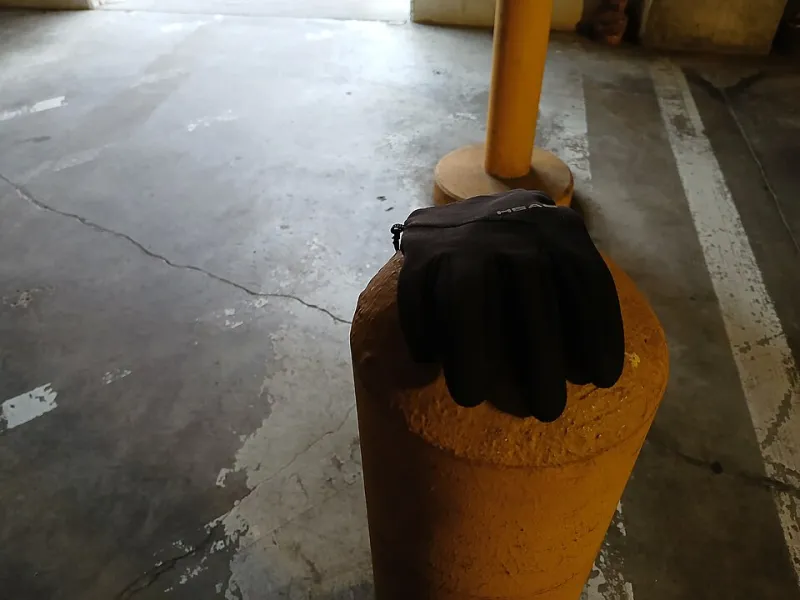
Photo: Ser Amantio di Nicolao, CC BY-SA 4.0, via Wikimedia Commons
By the second week of November 2026, the tree by the bus shelter had already acquired a navy child's glove, a tartan scarf and a single trainer. None of them had a label. None of them had an owner, at least not one who had come forward. And none of them were, strictly speaking, anybody's business.
That is the thing about the village green lost-property tree: it is not official. There is no plaque, no rota, no laminated sheet explaining the rules. It is just a tree, a bench, a bus stop and a dog bin, arranged by chance into the most reliable lost-and-found department in the parish. I decided to audit it. Not for the council, not for the parish, but for me and my notebook. I gave each object a line: date found, condition, apparent owner, days on branch. It seemed a reasonable way to spend a winter.
The Tree That Isn't a Noticeboard
The tree stands about four paces from the bus shelter, which is close enough to be useful and far enough away to avoid looking deliberate. People hang things on the lower branches, or drape them over the back of the bench if the weather is dry. The etiquette is unwritten but surprisingly consistent. You do not put anything on the tree unless it looks lost. You do not put food there. You do not put a bin bag there, however much it might need one. And you do not, under any circumstances, move somebody else's glove to the charity shop box without giving it at least a fortnight.
A dog-walker called Bev put it best. She was coming back from the rec with a spaniel called Pip and a look of mild suspicion at my notebook. 'It's not a noticeboard,' she said. 'It's more of a waiting room. Things go there until they're collected. Or until they're not.'
That felt right. The tree is not a display. It is a suspension of judgment. A lost glove is a small unfinished story, and the tree is the place where the parish agrees not to write the ending too quickly.
What Turned Up, and What Didn't
By the end of my audit I had logged fourteen single gloves, three hats, two scarves, one dog lead, a child's welly and the trainer. The trainer was size eight, grey with a white sole, and it stayed on the third branch from the bus stop for nineteen days. I never found out who it belonged to. Nobody else did either, or if they did, they kept quiet about it.
What interested me was what did not turn up. No phones. No wallets. No keys. People lose gloves and hats in the way that people lose umbrellas and tempers, but they do not, generally, leave their house keys on a branch for the parish to admire. That tells you something about trust, or maybe about how quickly we notice the things that matter. A glove can wait. A key cannot.
The gloves themselves were mostly left hands. I do not know why. Perhaps left-handed gloves are simply more prone to falling out of pockets, or perhaps the right-handed ones are claimed faster. Bev had a theory that it was something to do with dog leads and car doors. Maureen at the bus stop had a different theory: 'It's because people wave with their right hand. The left one's just along for the ride.' I wrote both down. Neither felt entirely scientific. Both felt entirely village.
The Bus-Stop Regulars
Maureen catches the 08:12 three days a week and has done for years. She regards the tree with the same mild interest she reserves for the weather and the state of the church roof. 'I've seen a bra on there once,' she said. 'And a saucepan. Not together, thankfully.'
She told me that the tree has its own seasons. Gloves appear after the first cold snap. Hats follow. Scarves are usually a December thing. In summer you get sunglasses and the occasional paperback, though the paperback is more likely to be a deliberate donation than a loss. 'People leave books for other people,' she said. 'That's different. That's a lending library with no card system.'
I asked her whether she had ever taken anything. She looked at me as if I had asked whether she had ever stolen a traffic cone. 'I've reunited a glove with a child,' she said. 'That's not taking. That's returning.'
The Parish Clerk's Filing System
The parish clerk, who asked not to be named but who I will call Alan because he looks like an Alan, was mildly amused by the whole business. There is no official policy on the tree. The council does not clear it. The parish does not insure it. If something becomes a hazard, somebody from the village hall will deal with it. Otherwise, it is left alone.
'We have a box in the back of the hall for genuine valuables,' Alan said. 'Phones, wallets, that sort of thing. Gloves don't really qualify. They're not valuable enough to lock up and not worthless enough to bin. They exist in a sort of administrative grey area.'
That grey area is where the tree lives. It is not fly-tipping because it is on a branch. It is not a charity shop because nobody has decided to give it away. It is not a museum because there are no labels, no glass cases, no opening hours. It is a holding pen for the almost-lost.
The Quiet Etiquette of Not Tidying Up
What I liked most about the audit was how little anyone wanted to interfere. People would straighten a glove that had slipped, or move a hat out of the rain, but nobody was in a hurry to clear the tree. Throwing away a lost glove feels like a small accusation. It says: you are not coming back for this. And in a village, you do not make that accusation on somebody else's behalf.
So the tree accumulates. It gets a bit tatty. Some things sit there for weeks and then vanish, claimed quietly by an owner who does not want to make a fuss. Others stay until they are so faded and rain-soaked that even the most hopeful dog-walker admits defeat. The trainer was one of those. It disappeared in the end, but I never saw who took it. I choose to believe the owner came back. The alternative is too sad and too funny, and I have a notebook to finish.
A Short Report From the Branches
As of mid-November 2026, the tree is holding steady. Four single gloves, one bobble hat, a scarf with a faint smell of woodsmoke and the usual sense that something is about to be claimed. If you have lost a grey trainer, size eight, it is not there any more. If you have lost a left-hand navy glove with mud on the cuff, it might be. I am not saying you should go and look. I am saying the tree is there, and it is not going anywhere.
I will keep the notebook going until the frost stops. It is not a project, exactly. It is more of a habit. But if the tree can wait for a glove, I suppose I can wait with it.