Tape, Tickets and the Village Switchboard: A Year at the Post Office Counter

I didn't set out to become the queue's unofficial archivist. It began in January, with a returned parcel, a pen that worked, and a woman in front of me saying, quite firmly, that she wasn't going to be beaten by a roll of tape. By the time I reached the counter I had written down three observations and missed my turn. That felt like a fair exchange.
So I kept going back. Not every day — I'm not made of stamps — but often enough that the staff stopped asking if I needed help and started asking what I'd noticed. A year of listening in one small post office queue will teach you more about the country than most panel discussions. It is theatre, switchboard and confession booth, with a ticket machine that sounds like it's clearing its throat.
The Queue Is the Meeting
We like to say the village hall is the heart of things. In practice, a lot of the heart is here: a strip of lino, a noticeboard with a faded jumble sale poster, and six people pretending not to listen while listening to everything.
Pension day has its own rhythm. The door sticks, someone holds it, someone says 'after you' and means it, and within four minutes the queue has covered the weather, a hip operation, the price of a stamp and a grandson who has moved to Leeds. Nobody organises this. It simply happens, like condensation on the window.
What struck me most was how often the queue did the work of introduction. New arrivals were spotted before they'd reached the counter. Elderly neighbours were checked on without anyone using the phrase 'checking on'. A man I'd never spoken to asked after my shed roof because he'd heard about it from someone who'd heard about it from the man who sells eggs. In 2026, when so much local life has slipped onto screens, here was a room where information still travelled by breath and nod.
Parcel Tape and Other Small Doctrines
There is an etiquette to the post office queue, and it is stricter than you'd think.
Have your label ready. Don't tape the parcel at the counter unless invited. Don't comment on the size of someone's return unless they comment first. If you are sending something awkward — a lampshade, a walking stick, a birthday present wrapped by a child — you are allowed one apologetic laugh, but not a full speech. The queue appreciates brevity in the same way it appreciates a well-folded bag.
The counter staff are the enforcers of none of this, yet they benefit from all of it. I watched a sub-postmaster quietly slide a roll of tape towards a man who had brought his parcel in three separate pieces and no hope. I watched a woman with a passport form be told, gently, that she'd need to sign inside the box, not near it. The queue didn't tut. It waited. That, too, is a kind of manners.
And there is the unspoken rule about time. You can chat, but not endlessly. You can be slow, but not careless. The person behind you has a bus to catch, or a dog in the car, or simply a low tolerance for other people's administration. We all know it. We all pretend we don't.
Passport Photos and the Performance of Patience
The photo booth is the queue's little stage. The curtain never quite closes. The stool goes up and down with a clunk. Inside, a person is briefly required to become a version of themselves suitable for official scrutiny: neutral expression, no shadow, eyes open, dignity optional.
I have heard more honest self-appraisals outside that booth than in most mirrors. 'Does that look like me?' 'It looks like my dad.' 'Can I have another go?' The machine does not answer. The queue does, usually with a kind lie.
Passport photos are also a reminder of what the counter still does that a phone cannot easily replace. It witnesses. It confirms. It takes a thing you've done in private and makes it official in public. In a year when more services have moved online, that felt less old-fashioned than it used to.
What the Counter Still Holds
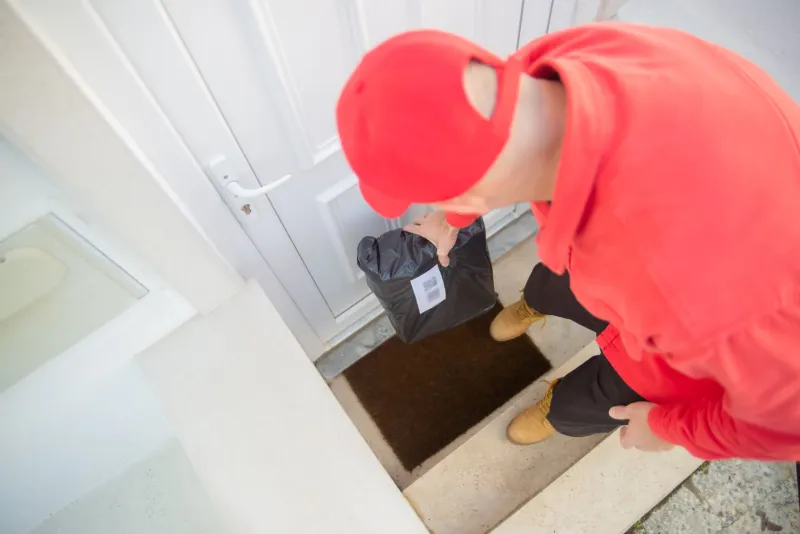
People post many things in 2026. Returns, mostly. Small-business parcels. Birthday cards that arrive late. A surprising number of jiffy bags held together with hope and brown tape. But they also bring things that don't fit the parcel story: bank slips, meter readings, forms with boxes that require a stamp, letters to councils, letters to cousins, letters to people who don't use email.
The post office has become a switchboard for modern life. It is where you go when the app won't accept your proof of address, or when you need a document signed by someone who still knows what a counter is for. It is not perfect. Hours are tight. Queues can be long. The noticeboard still carries a poster for an event that happened in 2024. But the place holds.
What I noticed most across the year was the quiet arithmetic of it. A pension collected. A parcel sent. A form checked. A neighbour seen. Small transactions, repeated, add up to something larger: the sense that you are part of a place that knows where you are, even if it doesn't always know your name.
The Last Six People
On my final visit, there were six of us in the queue. A young man with a stack of eBay parcels. A woman returning a coat. An older gentleman posting a letter to Australia. A mother with a child who had been promised a sticker. Two others I didn't know, and me, pretending to read the leaflet about travel insurance.
The child got the sticker. The coat was accepted. The letter to Australia was weighed and paid for. Nobody said anything profound. Nobody needed to. We stood in a line, in a small room, on a wet Tuesday in November, and for four minutes we were not strangers so much as neighbours waiting our turn.
I went home and put the kettle on. The notebook is nearly full. The queue, I suspect, will carry on without me — tape, tickets, small talk and all.