Brick on the Lid, Faith in the Tin: Notes From a Summer of Roadside Honesty Boxes
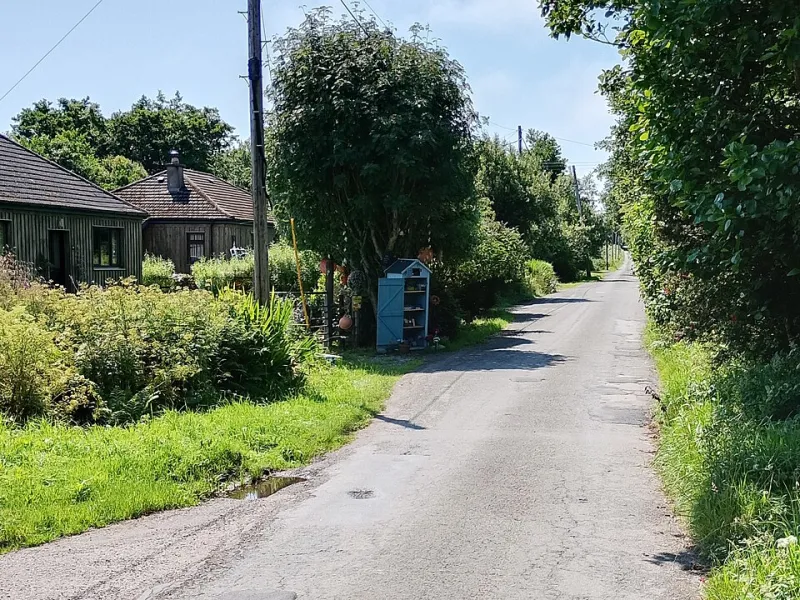
Photo: Jim Smillie , CC BY-SA 2.0, via Wikimedia Commons
There is a particular sound a roadside honesty box makes when you lift the lid: a small wooden clack, followed by the rattle of coins that may or may not have been there since Tuesday. I heard it a lot this summer. Between June and the end of August, I made a point of stopping at every honesty box I passed, notebook in the passenger seat and a pocketful of shrapnel I had been saving for precisely this sort of research. My wife called it ‘loitering with intent’. I prefer ‘fieldwork’.
The brief was simple enough: write down what was for sale, what people were asking, what I paid, and what the tin contained. I ended up with fourteen pages of courgettes, three jars of marmalade, one bag of windfall apples, a box of duck eggs and a surprisingly detailed record of other people’s small change. It was meant to be a light-hearted ledger. It turned into something else somewhere around the third week of July, when I realised I was less interested in the prices than in the fact that nobody was watching.
The ledger begins
My first entry was a tabletop outside a bungalow on the edge of a village I won’t name because the owner has enough visitors as it is. A hand-painted sign said ‘COURGETTES 50p EACH — PLEASE LEAVE MONEY IN TIN’. The tin was an old Quality Street container, the lid held down by a house brick with a chip out of one corner. There were six courgettes, a jar of something labelled ‘Marrow Chutney — mild’, and a small dish of coins. I put in a pound and took two courgettes. The dish already held £3.40, a euro cent and a button. I wrote it all down.
By the end of the first month, I had a working taxonomy. There are, it turns out, several species of honesty box. The garden-gate box, usually a plastic crate with a cloth over it, selling whatever has gone mad in the vegetable patch. The shelf-and-shed box, more ambitious, with jam, eggs and sometimes a cool bag of sausages. The repurposed-cabinet box, which has clearly been a bedside table in a previous life and now holds second-hand paperbacks and a jar of copper coins. And the milk-churn box, rare but memorable, usually found at the end of a farm track and held shut with a stone.
The lids are almost always weighted. Bricks, stones, a length of timber, a half-brick with a spider living under it. I began noting the weights in the margins: brick, half-brick, flint, two stones and a piece of slate. It is not a scientific measure. It is, I think, a measure of how much wind the owner expects and how many lids have blown open before.
What people pay, and what they leave
Here is the thing about the money: it mostly adds up. Not perfectly. There were boxes where the tin was up on the advertised price and boxes where it was down. One Thursday I found a box selling bunches of sweet peas for £1 and the tin contained £7.50 in assorted coins, a folded fiver and a note saying ‘sorry, only had a ten’. Another box, selling eggs at £1.20 for half a dozen, had 90p and a hairgrip in it. I chose to believe the hairgrip was accidental.
The coins themselves are a small museum of the realm. Pre-decimal pennies turn up, worn smooth. Foreign coins from holidays — euros, a Canadian quarter, something with a hole in it. Washers. The occasional button. I found three separate Robertson’s jam tokens in one tin, which felt either like a collector’s dream or an extremely slow-motion prank. The notes are rarer and more formal: a fiver folded into eighths, a tenner held down by a pebble, once a twenty with ‘for the gooseberries, sorry I’m late’ written on a scrap of paper.
What struck me was not the honesty — we expect that, or we say we do — but the negotiation. People leave more than they need to when they take the last jar, or when they have no change, or when they have taken a punnet and eaten a few on the drive home. They leave less when they are short, and the box absorbs it. There is no debt collector. There is just a tin and the next person.
The unwritten rules
By August I had identified a few conventions that nobody has ever written down but everybody seems to know. You do not take the last item without leaving the money visible. You do not rummage. You do not photograph the inside of the tin for social media, although I will admit to sketching it once. You put the brick back exactly as you found it. If the lid is stiff, you do not force it; you assume the owner is having a lie-in.
And you do not, under any circumstances, comment on the prices. The prices are not really prices. They are suggestions with a bit of arithmetic attached. A box of courgettes at 50p each is not a business model; it is a way of saying ‘I have too many courgettes and I would rather you had some than they went to the compost’. The tin is there to make the transaction feel fair, not to make anyone rich.
What the tin knows
I finished the summer with £11.62 in my own pocket that I had not spent, a notebook full of brick weights and a slightly obsessive interest in the phrase ‘please slam the lid’. I also finished it with a quieter feeling that is harder to put in a ledger. The honesty box is a small, stubborn act of faith. It says: I will leave this out, and you will probably do the right thing. Most people do. The ones who don’t are absorbed into the tin, the next jar, the next courgette.
We talk a lot about trust as if it is a grand thing, national or institutional. Mostly it is a Quality Street tin with a brick on top. It is a jar of chutney and a note saying sorry, I only had a ten. It is the knowledge that if you take the last punnet, you leave the extra 20p, and if you don’t, someone else will next time. I don’t know what that adds up to in the end. But I know I’ll be stopping again next summer, notebook open, change at the ready, and I’ll be putting the brick back exactly where I found it.