A Slight Smudge on September: What the 2026 Village Calendar Says About Us
Photo: village charity calendar hanging on kitchen wall with tea mug, via c.pxhere.com
The 2026 village calendar costs six pounds and is printed on paper thick enough to suggest somebody at the committee has opinions about paper. It is sold in aid of the church roof, which is a cause so universally agreed upon that you can say it without fear of argument. I bought two copies: one for the kitchen and one for the shed, where it will either inspire me or quietly curl at the edges until August.
This is not a glossy calendar. There are no moody landscapes shot by a professional in a linen shirt. It is a collection of photographs taken by people who live here, selected by people who also live here, and printed by a firm in town that clearly did its best. Which is why it feels less like merchandise and more like a document. A group portrait in twelve instalments, with a car park in July.
The Calendar as a Group Portrait
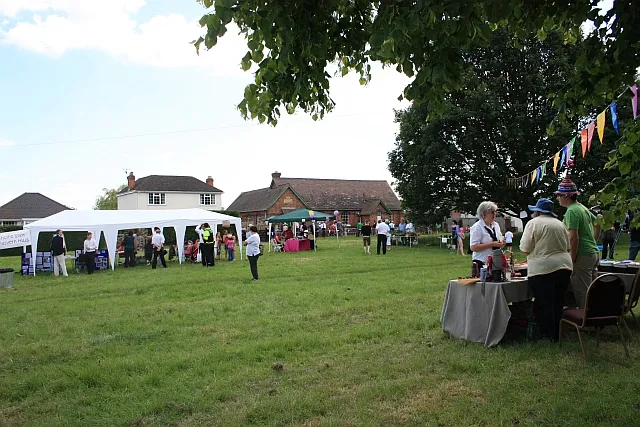
A village calendar tells you what a village thinks it looks like. The answer, this year, is: frost on the allotments, a cricket pavilion at golden hour, someone's thumb near the daffodils, and a municipal car park on a Tuesday. There is something deeply honest about that. If you asked a marketing consultant to capture the spirit of the place, you would get honey-coloured stone and a pub sign. What you actually get is a blurry harvest supper and a note in the corner of June saying 'taken by Brian'.
The whole thing has been assembled by a subcommittee of three, one laminator and a WhatsApp group that occasionally descends into CAPITAL LETTERS. The cover is laminated, the inside pages are not, and the whole enterprise has the air of something made with affection and a deadline. I mean that as a compliment. Polished things are easy to admire. Slightly wonky things are easier to love.
The Ranking, Month by Month
I have ranked the months. This is the sort of thing I do now, apparently. The criteria were simple: does the photograph make me want to live here, and does it make me want to ring somebody about it?
1. November. A photograph of the remembrance display by the war memorial, taken in flat morning light. No filter, no drama, just a row of knitted poppies and a wet bench. It is the best photograph in the calendar because it does not try to be. It simply is.
2. June. The cricket pavilion at golden hour, with the outfield slightly too long and a dog in the corner that nobody has mentioned. Brian took this one. Brian should be given more months.
3. August. The harvest supper, blurred beyond all professional acceptability. You can just make out a trestle table, a plate of sandwiches and somebody's aunt mid-laugh. It is technically a disaster and emotionally perfect. I would frame it.
4. March. Daffodils by the bus shelter. There is a thumb in the bottom left corner. The committee has left the thumb in. This shows integrity.
5. January. Frost on the allotment gates, taken by somebody who was up early enough to mean it. Bleak, beautiful, and exactly what January is for.
6. October. Apple pressing behind the village hall. A bucket, a jumper, a child's welly. It looks sticky and I respect it.
7. September. A slight smudge across the top corner, as though the photograph was printed while the laminator was still warming up. The image itself is fine: the footpath to the ford, dappled light, a dog that has clearly seen better days. The smudge gives it character. I have decided not to complain.
8. April. A lamb in a field. It is a lovely lamb. It is also the same lamb photograph that appears in every village calendar in England, possibly the same lamb, possibly a stock lamb with an agent. No harm done.
9. December. The lights switch-on, taken from behind a crowd, so most of the image is the back of somebody's anorak. The wonky star is just visible. I was there. I know it was better than this.
10. February. The gentleman I now think of as Mr February is facing resolutely left while everyone else is facing right. He is either mid-turn or has spotted something urgent near the postbox. It makes me want to know his story. It also makes me want to ask why nobody swapped the photo.
11. May. The village hall quiz night, taken in light so dim that the winning team looks like a séance. You can just about read the raffle sign. The atmosphere is there; the faces are not.
12. July. The car park. Not the pub garden next to it, not the view beyond it, not the market that occasionally occupies it. The car park. Tarmac, white lines, a bin. It is inexplicable and I have thought about it every day since Tuesday.
The Organiser Speaks
I tracked down Margaret Ellery, who has chaired the calendar committee for four years and who answered her door holding a tea towel and a proof copy. She was not defensive about July. She was almost proud.
'We had thirty-eight entries this year,' she said. 'And by the time we got to July, every single photograph was either a blur, a close-up of a flower, or the back of somebody's head. The car park was the only one that was in focus. So we used it. It's part of the village, isn't it? People park there.'
She also confirmed that the laminator runs hot after about twenty minutes and that the smudge on September is 'a known issue'. The proof copy is kept in a drawer, laminated, because Margaret believes in protecting things that matter. 'It's not the Tate,' she said. 'But it's ours.'
What It Tells Us
The 2026 calendar is not a tourist brochure. It is a self-portrait with a thumb in it. It says that we value the cricket pavilion and the remembrance display, that we will tolerate a blurred harvest supper because the blur is where the laughing happened, and that we are prepared to devote an entire month to a car park if the car park is the only thing in focus.
Next year's deadline is October, apparently. I have already started taking photographs. None of them are any good. I may submit one anyway. That, I think, is the spirit of the thing.