The Postcode Is a Suggestion: A Year of Knocking on the Wrong Doors
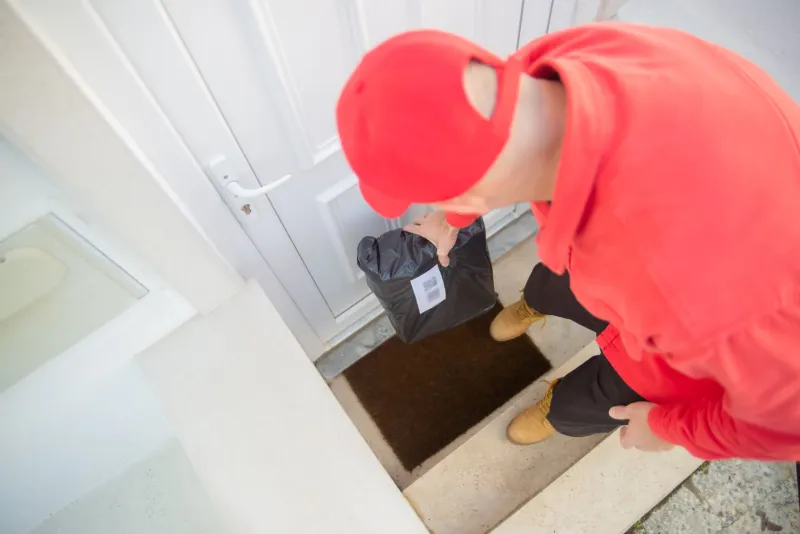
There is a particular kind of British hope involved in opening the front door to a courier. You hope it is for you. You hope it is not something requiring a signature, a code, or a conversation about where the safe place might be. And you hope, quietly, that it is not another parcel for number eleven when you are number nine and have already explained this twice this week.
A year ago this month, I started writing them down. Not in a dramatic way. Just a notebook by the door, the sort with a elastic band and a coffee ring on the cover. Every time something arrived that was not mine, I gave it a line: date, item, intended address, what I did about it. It began as a way to stop muttering at the cat. It ended as a portrait of the street.
The notebook takes over
The first entry was a bank letter for a Mr. Hollis at number fourteen. We are number nine. Fourteen is not even on the same side. I walked it round, knocked, and got a cheerful man in a dressing gown who said, 'Ah, that'll be the new system,' as if the postal service had recently been replaced by a raffle.
The second was a takeaway menu for a pizza place I have never ordered from, addressed to 'Flat 2, 9A'. There is no flat two. There is no 9A. There is a shed. I put the menu in the recycling and wrote 'shed?' in the notebook. By March, I had thirty-one lines. By July, forty-six. Last week I added number sixty-three: a small padded envelope for a woman called Priya who lives, according to the label, at number six, but who actually lives at number eight and has done for eleven years.
The usual suspects
You start to notice patterns. Certain names recur. Certain houses act as magnets. Number three receives post for four different surnames, none of which belong to the couple who live there, who have been there since 1987 and seem to find the whole thing mildly entertaining. Number eleven gets parcels for the entire cul-de-sac, largely because it has a bright red door and a porch, and couriers are drawn to a porch like moths to a lamp.
Then there is the takeaway menu problem. I do not know who is distributing menus on behalf of restaurants that may not exist, but they are diligent. We have had menus for a Thai place in a town twelve miles away, a kebab shop that closed before the pandemic, and one laminated card for a fish and chip van that operates, according to the small print, on Tuesdays in a lay-by near Devizes. I have never been to Devizes. I am now strangely tempted.
The parcels are their own economy. In September alone I took in a replacement phone case, a pair of gardening gloves, a book about beekeeping, and a box that rattled. The box that rattled sat in my hallway for four days. I began to feel responsible for it. I considered opening it, just to check it was not alive. I did not open it. When the owner finally came round, she said, 'Oh, that's just the good cutlery,' and took it away without further explanation.
The neighbour who knows
Every street has one. Ours is Susan. Susan knows whose dog is called Dennis. Susan knows that the people at number twelve are not married but have been together so long that the distinction has lost all meaning. Susan knows which house is having a new boiler and which house is pretending to have a new boiler. And Susan, crucially, knows where every misdelivered item actually belongs.
I took her the notebook in June, mostly as a joke. She read it with the seriousness of a coroner. 'You've got the Hollis address wrong,' she said. 'That's the old Hollis address. The new Hollis is at number fifteen, but they still get the old post because the bank hasn't caught up.' She turned a page. 'And that parcel for Patel? That's not Patel. That's the other Patel. Different Patel. Nice Patel. Lives at number two.'
It was like watching a filing cabinet come to life. By the end of the afternoon, Susan had corrected eleven entries, added two names I had never heard of, and told me a story about a misdelivered birthday cake in 2019 that I am still not sure I believe. The notebook was no longer a grumble. It was a directory.
What the wrong doors tell you
Here is the thing about misdelivered post: it is annoying, but it is also evidence. It shows you that the systems we rely on are held together by people. The postcode is a suggestion. The house number is a rumour. What actually works is the neighbour who spots a parcel on a step and takes it in, the person who knows that the new family at number seven haven't changed the name on the bell yet, the woman at number fourteen who will walk a letter round to the right door because it looks important.
I am not going to pretend this is a grand theory of community. It is a notebook with a coffee ring on it. But sixty-three lines in, I have learned more about my street than I did in the previous five years of nodding at people over wheelie bins. I have learned that 'return to sender' is rarely the end of the story. Usually it is the beginning of a small, slightly awkward conversation on a doorstep, which is, when you think about it, the most British form of social glue there is.
Next week I am taking the notebook to Susan again. She has promised to explain the business with the fish van. I have a feeling it is going to be worth the walk.